Threads
Threads: First person interactive game built by the artist in the Unreal game engine.
Project Summary:
Threads presents artifacts and environments shaped by interwoven histories of witch persecution, labour, and material culture. It invites viewers to engage with stories that affected communities in the past and resonate in the present-day.
This body of work was developed during Victoria Bradbury’s 6-month 2026 US-UK Fulbright Commission Fellowship at Glasgow School of Art's School of Innovation and Technology. Through artistic research across SIT, Fine Art, and Design, she translated historical fragments into a first-person game and textile forms.
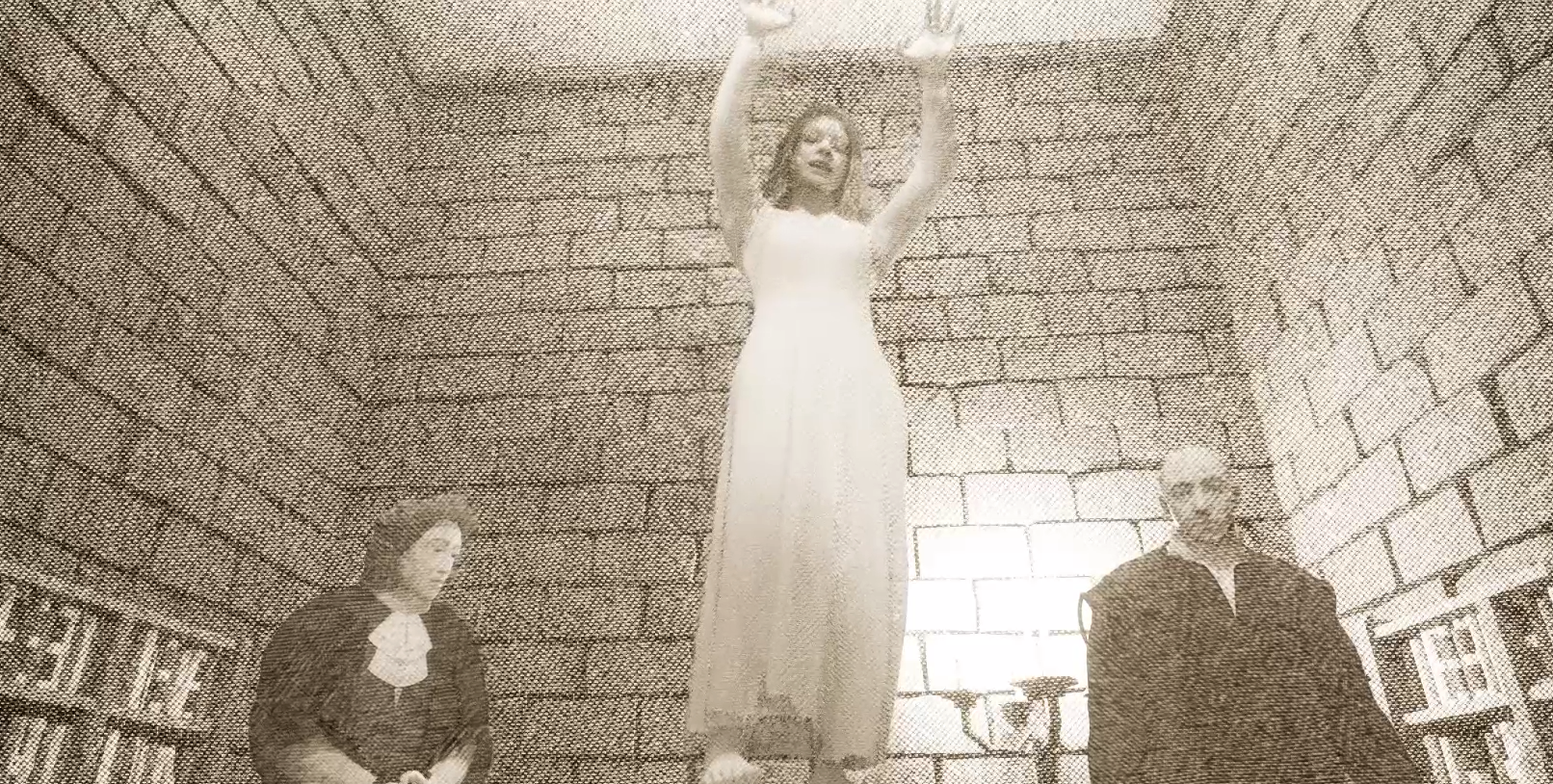
Young Christian floating above Minister and Father in Proving Room level.
Background:
Threads draws particular inspiration from the 1697 Renfrewshire witch trials and the Paisley thread industry. The accusations began when eleven-year-old Christian Shaw displayed unusual symptoms, leading to members of the local community being accused of witchcraft. Shaw remains central to the story, though her role in the accusations was amplified by those in positions of power. The ensuing trials resulted in the deaths of eight people; four women and four men.
Paisley later became known for its thread and textile industries, and Shaw herself became an important figure in these developments when as an adult, she founded the Bargarran Thread Company.
Developing the Game:
The Threads game was designed, built and coded by Victoria during her 6-months at GSA. In 2024-25, she worked with undergraduate research students at UNC Asheville to create base architectural assets, game shaders, and initial games programming. In 2026, She conducted research in Paisley and around Scotland about the witch trials, and at SIT’s 65 W Regent St studios, built the assets and coded the game. SIT colleagues got involved with 3D modeling and voice acting and a Glasgow-based acapella group, Muldoon’s Picnic, composed and sang the song heard throughout the game.
Threads Game Instructions:
W and Mouse: Move Forward
S and Mouse: Move Backward
PRESS H to Go Home to Landing Level
PRESS Q to Spin in Spinning Room
HOLD T to Touch Christian in Proving Room
Artworks to Accompany Game:
Tapestries for the Accused, 2026
Digital Pigment Prints of Threads Costumed Metahuman Characters
The printed tapestries reference the 8 people who died as a result of the Paisley witch trials, but more broadly, represent the over 2,200 people, mostly unnamed, executed in the Scottish Witch trials between 1563 and 1736. The Paisley 8 are Catherine Campbell, Margaret Lang, Margaret Fulton, Agnes Naismith, John Lindsay, John Lindsay of Barloch, James Lindsay, (the previous 7 were executed at Gallow Green in Paisley on 10 June 1697) and John Reid (who died in prison before execution).
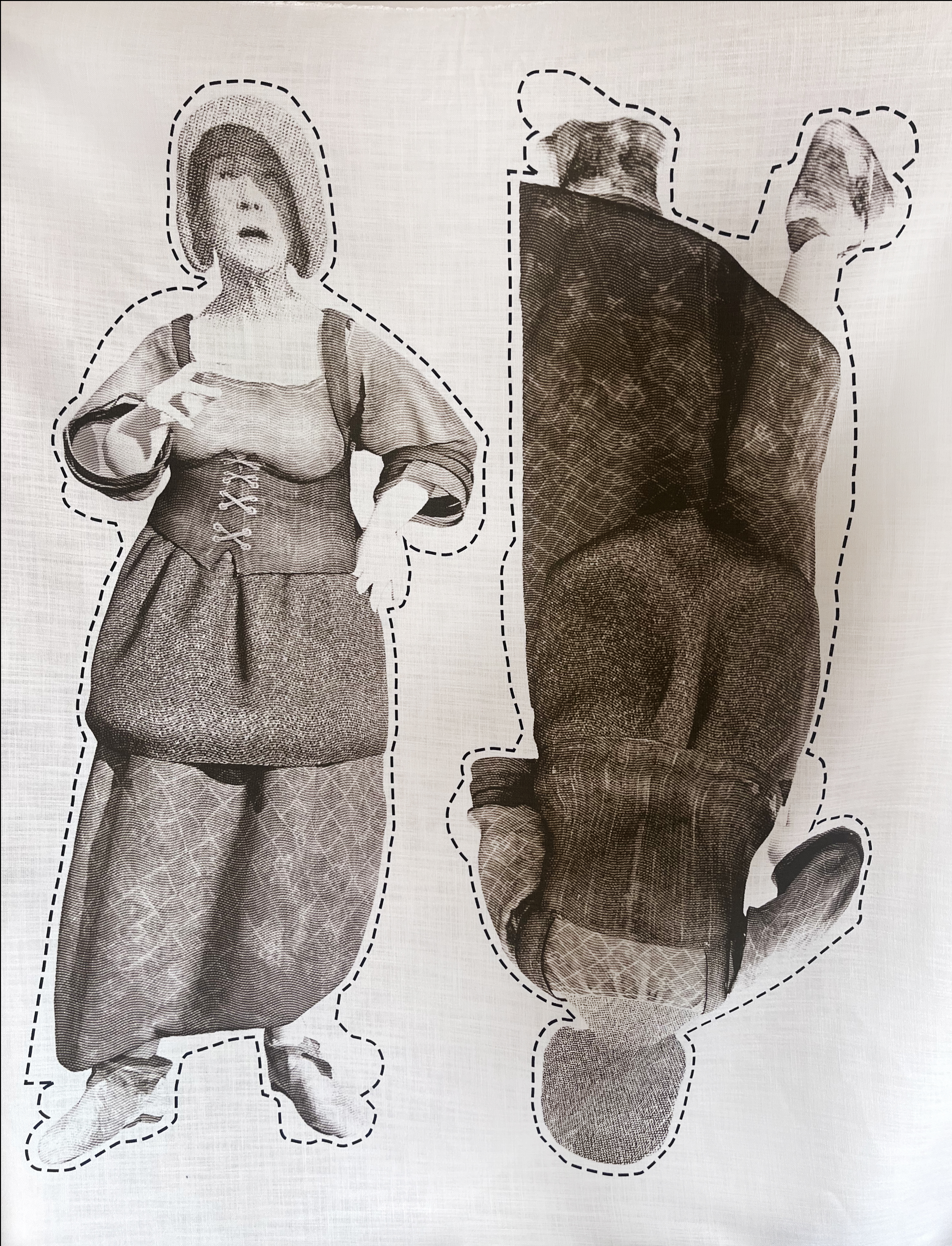
Textile print sample. Cotton Maynard, 4' x 8'.
Young Christian Shaw, 2026
TC-2 Jacquard Weaving, Photoshop and Pointcarre software
This weaving was created on the TC-2 Jacquard looms in GSA’s Reid Weaving studio. The image, which depicts young Christian who was afflicted with strange fits in Paisley in 1697, was compiled from screenshots of the Threads game and edited in Photoshop and Pointcarre weaving software.
Widow Christian Millar, Bargarran Thread, 2026
Digital Weaving of AI-Generated and Compiled Image, Adobe Firefly and Photoshop
This AI-prompt generated and artist-composited woven blanket imagines what a painted portrait of Widow Christian Millar (née Shaw) as a businesswoman in early 18th-century Paisley may have looked like. The hands in this portrait and in the characters in the game are distorted. While this is a common artifact of AI portraiture and a basic motion capture setup, it can also reference distorted truths shared in accusations and interrogations during the witch trials.
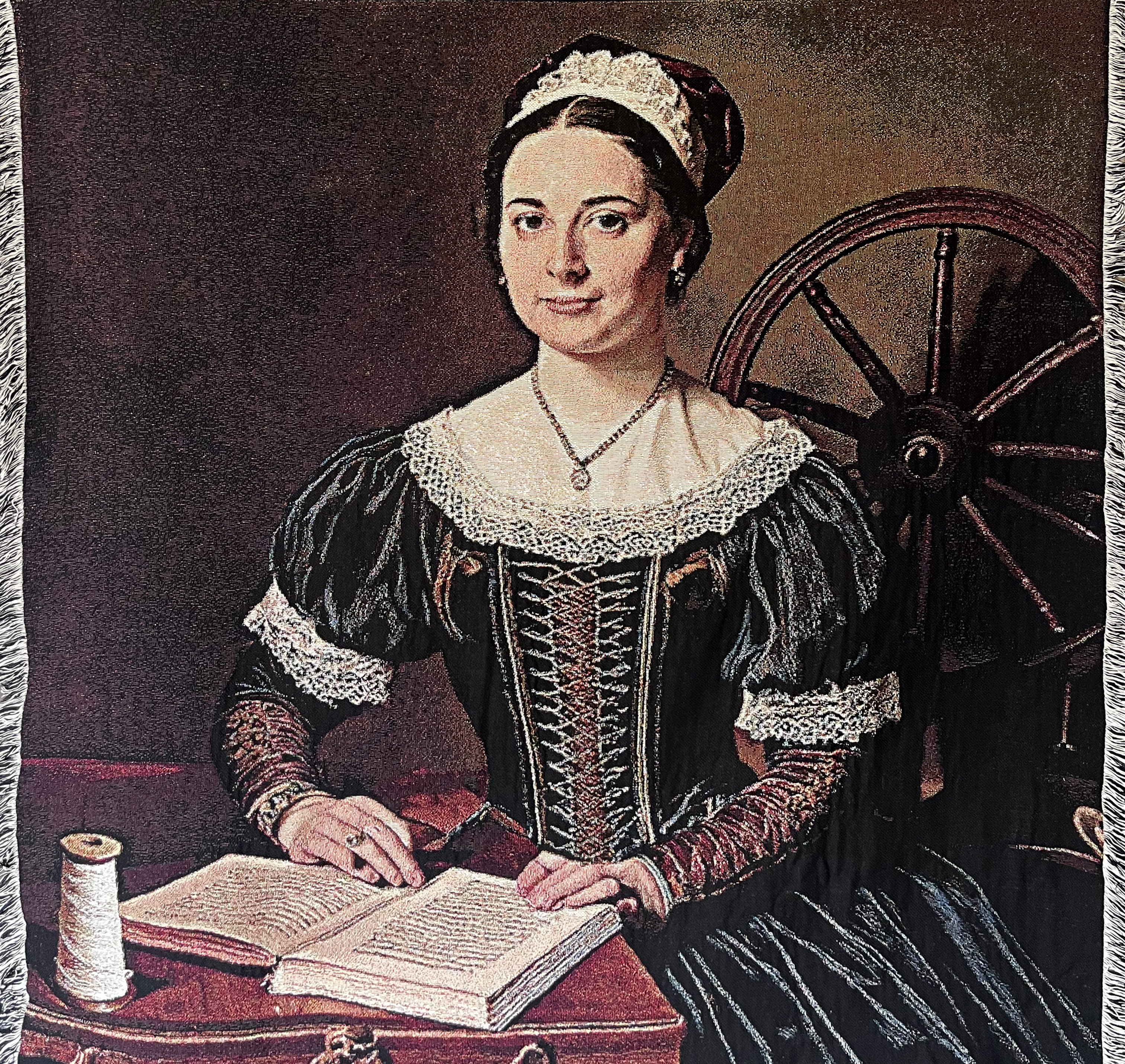
Textile digital weaving of AI-generated image of Widow Millar.
Installation:
This artwork is viewable on a PC computer with keyboard and mouse. Accompanying tapestries can be hung on a wall or windows.
Bibliography:
Adam, Isabel. Witch Hunt: The Great Scottish Witchcraft Trials of 1697. Book Club Associates, 1978
Bradbury, Victoria, and Suzy O’Hara. Art Hack Practice: Critical Intersections of Art, Innovation and the Maker Movement. Routledge, 2020
McEwan, Robert D. Old Glasgow Weavers: The Incorporation of Weavers, 1514–1981. Incorporation of Weavers, 1981
McLachlan, Hugh V. The Kirk, Satan and Salem: A History of the Witches of Renfrewshire. Grimsay Press, 2006
McLachlan, Hugh V., editor. The Kirk, Satan and Salem: A History of the Witches of Renfrewshire. Grimsay Press, 2022
Mitchell, Claire, and Zoe Venditozzi. How to Kill a Witch: A Guide for the Patriarchy. Octopus Books, 2025.
National Galleries Scotland, and the British Museum. Witches and Wicked Bodies. 2023.
Seafield, Lily. Scottish Witches: The Story of the Persecution of Witches in Scotland. Waverley Books, 2025.
Shaw, Allison. Ashes and Stones: A Scottish Journey in Search of Witches and Witness. Sceptre, 2023.
Williamson, Victoria. Red Runs the Witch’s Thread. Silver Thistle Press, 2024.
GSA Exhibition Inviation:
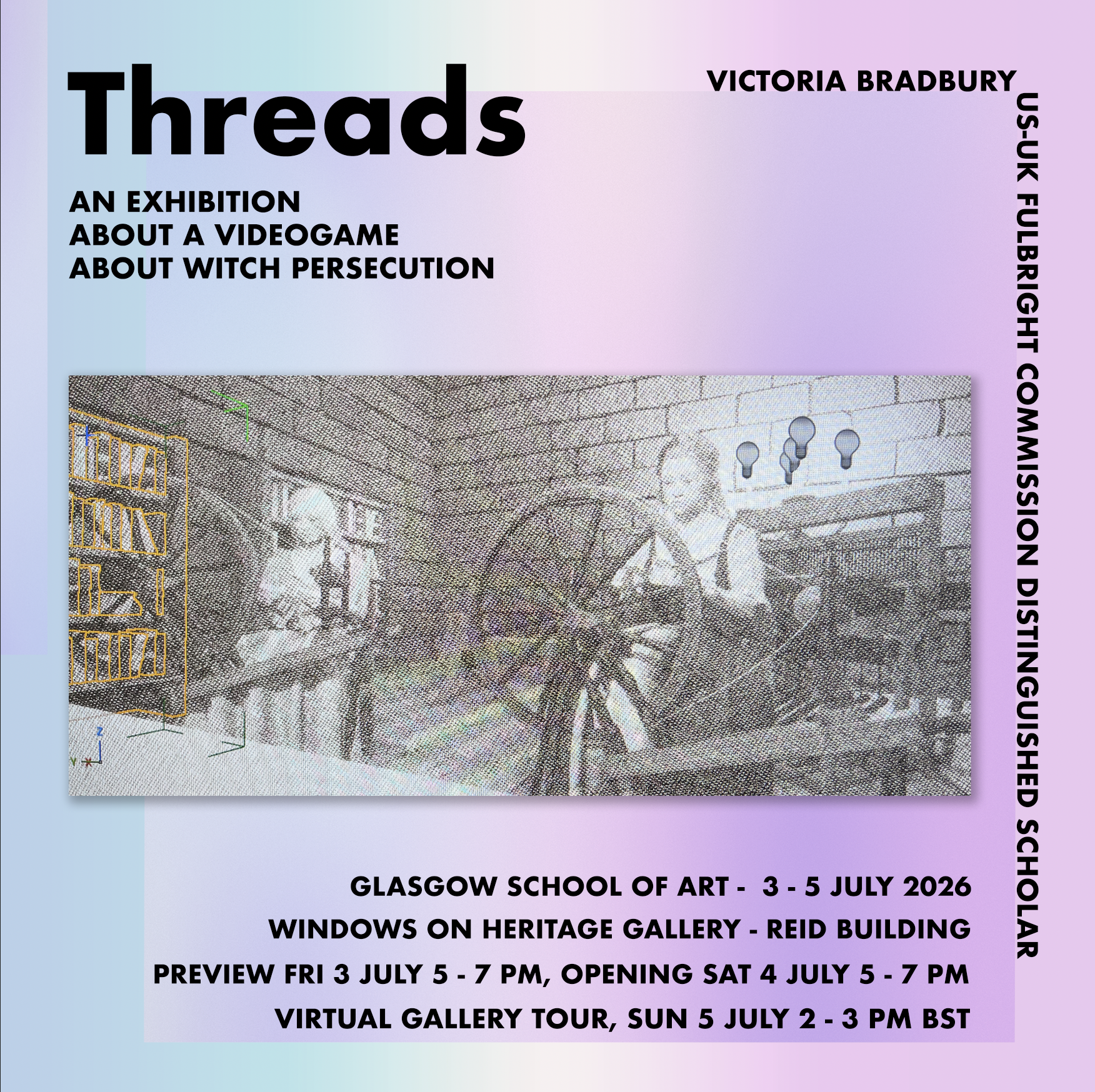
Poster for Glasgow School of Art Exhibition of Threads.
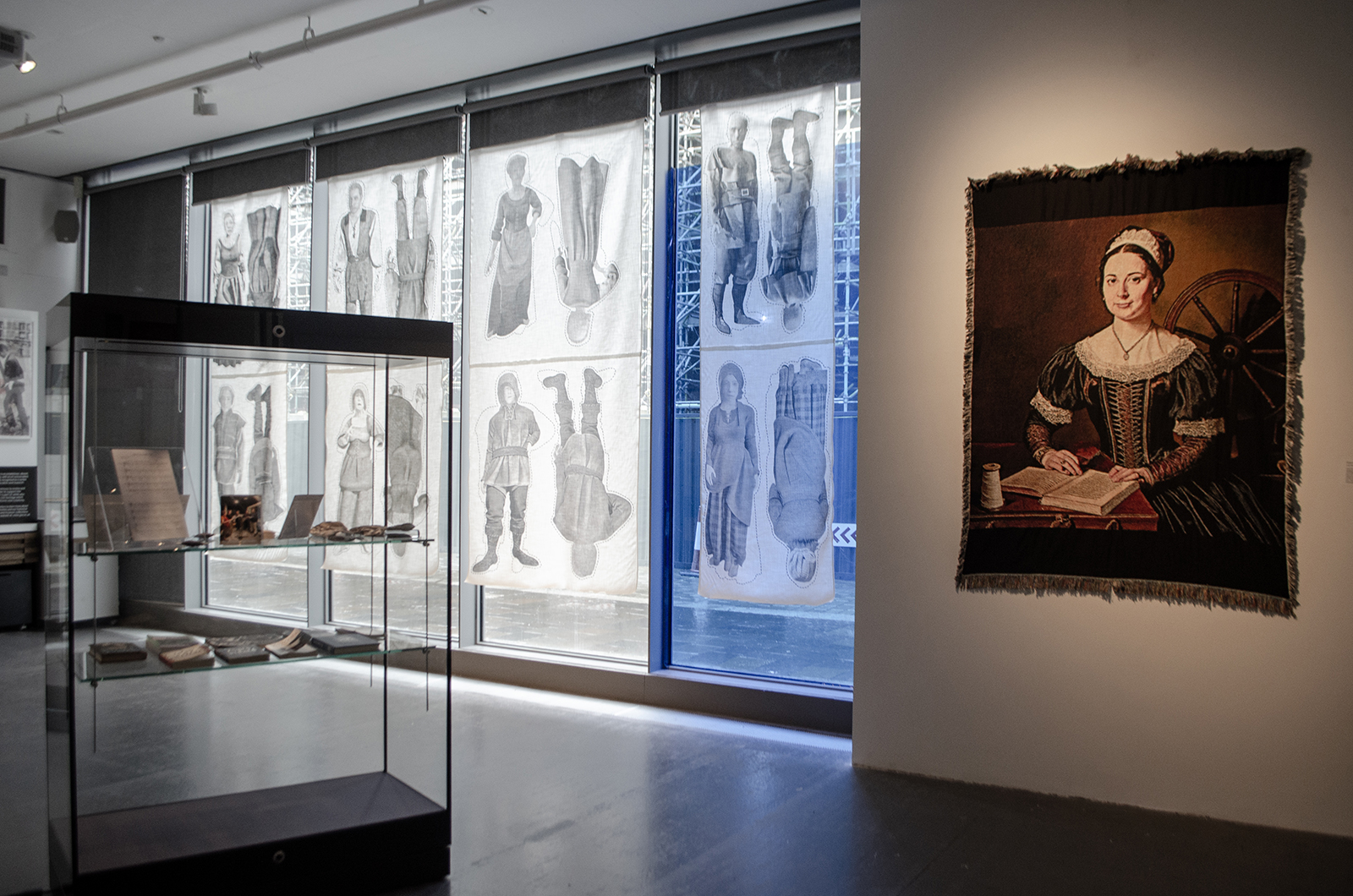
Threads exhibition at Window on Heritage Gallery, GSA, July 2026.
Additional Game Stills:
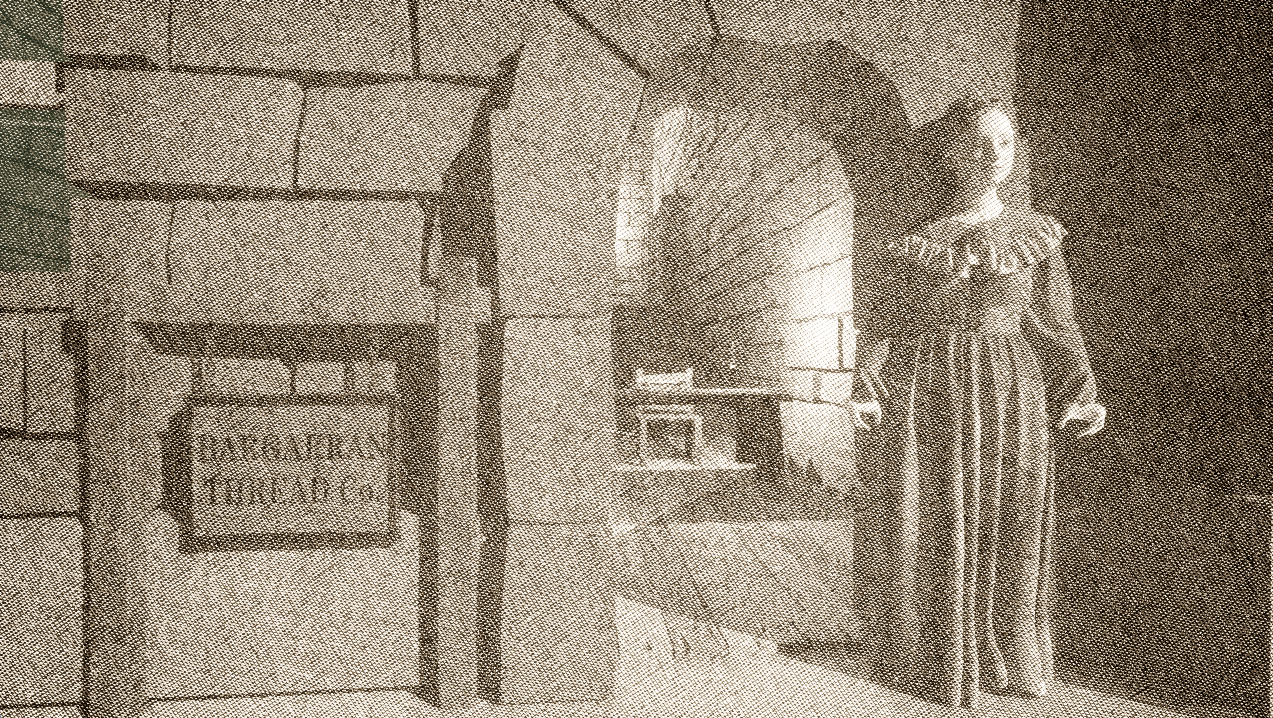
Thread Company, 1722.
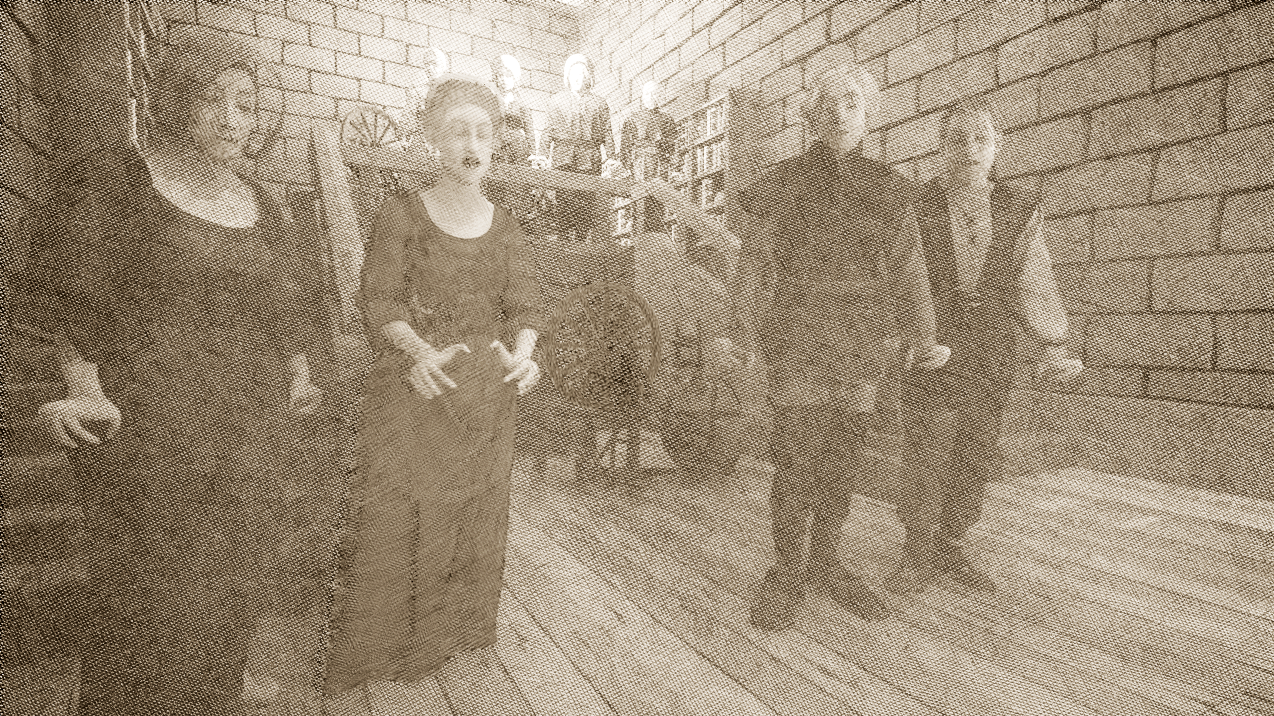
Singers in Spinning Room level.
Meeting Witches of Scotland:
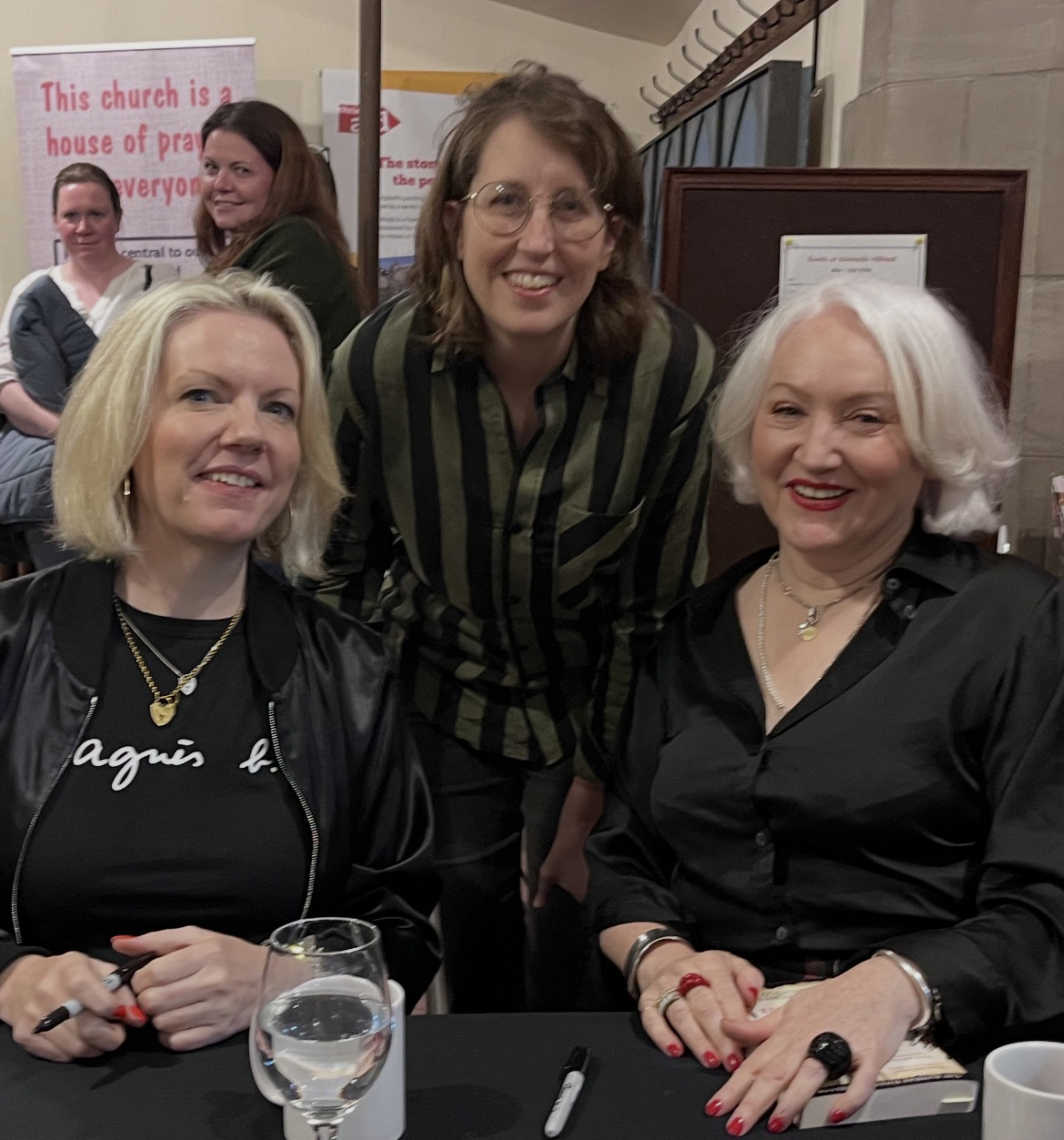
Victoria meeting Zoe Venditozzi and Claire Mitchell KC from Witches of Scotland, Glasgow, 2026.
//////CREDITS:
Threads is by Victoria Bradbury
//////ATTRIBUTIONS:
//Voiceover Artists:
Jessica Argo - Christian Shaw and Millar, Younger and Older
Daniel Morrison Neil - Minister
Roddy Hunter - Father
//Spinning Song:
Composed by Katy Lavinia Cooper
Performed by Muldoon’s Picnic - Katy Lavinia Cooper, Daisy Abbott, Sheena Mair, Harry Campbell, Alasdair Robertson
//UNC Asheville Student Research Assistants:
Sheldon Marshall - Set Building, Shaders, Prototyping programming
Samaya Young-Stewart - Early Costume Creation
Georgina Provencio Martinez - Early Research
//3D modeling of Spinning wheel:
Danny Buksh
//Costume 3D Model Credits:
Faezeh-Najafi and Saray Fashion Design - CG trader
Naama and 3D_ESCAPE - Connect Marketplace
//Spinning Wheel Sound:
BBC Sound Effects
//Special Thanks To:
The US-UK Fulbright Commission
Glasgow School of Art
GSA School of Innovation and Technology
University of North Carolina Asheville
UNCA Department of New Media
Centre for Advanced Textiles
GSA Weaving Studio
AI Use Attribution: AI was used during the production of this game to assist in writing dialogue in dialect. It was also used as a troubleshooting and developer-support tool for Blueprint programming in Unreal Engine and MetaTailor software.
Threads is a fictional interpretation of research related to the 1697 Paisley witch trials and the experiences of Christian Shaw. Thanks to Professor Hugh V. McLachlan for historical context. Threads is dedicated to all those who were wrongly accused.